
Iryna Gurevych – Full professor at TU Darmstadt, head of UKP Lab
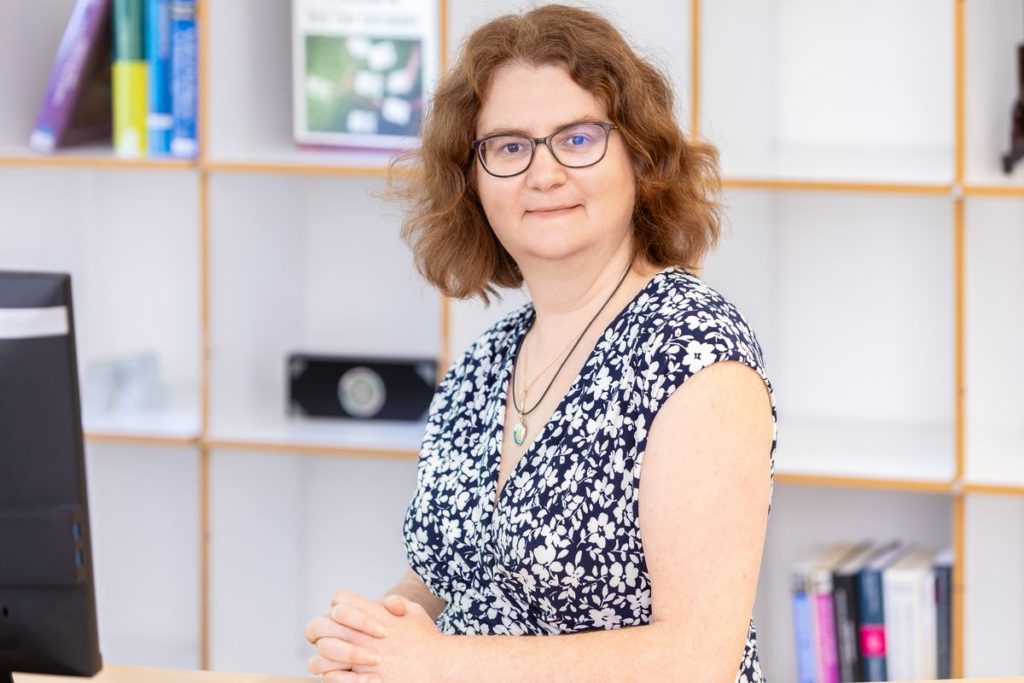
Iryna Gurevych is Professor of Ubiquitous Knowledge Processing in the Department of Computer Science at the Technical University of Darmstadt in Germany. She also is an adjunct professor at MBZUAI in Abu-Dhabi, UAE, and an affiliated professor at INSAIT in Sofia, Bulgaria. She is widely known for fundamental contributions to natural language processing (NLP) and machine learning. Professor Gurevych is a past president of the Association for Computational Linguistics (ACL), the leading professional society in NLP. Her many accolades include being a Fellow of the ACL, an ELLIS Fellow, and the recipient of an ERC Advanced Grant. Most recently, she has received the 2025 Milner award of the British Royal Society for her major contributions to NLP and artificial intelligence that combine deep understanding of human language and cognitive faculty with the latest paradigms in machine learning.
Welcoming AI as a New Colleague: How Should We Evaluate AI for Science?
AI is reshaping the work of researchers in real time. With the emergence of tools such as AI Scientist in 2024, a new era of AI-driven scientific discovery has begun. At the same time, high-profile venues are beginning to experiment with AI-assisted peer review. Yet the core question remains unresolved: How should we meaningfully evaluate AI for scientific work? In this talk, I will highlight challenges encountered in several projects focused on AI-assisted scientific communication and discuss how these challenges inform evaluation practices. I will examine methods for assessing AI-generated related-work sections and explore how automated reviewers can be evaluated with respect to research-design reasoning and novelty assessment. Together, these examples illustrate both the promise and the complexity of evaluating AI as it increasingly acts as a collaborator in scientific communication.
Johannes Schneider – Professor at University Liechtenstein
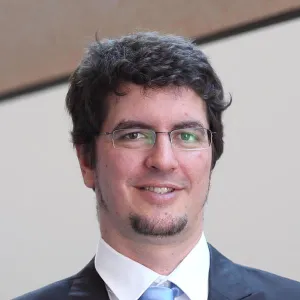
Johannes Schneider is Full Professor of Data Science and Artificial Intelligence at the University of Liechtenstein. He previously conducted research at the industrial research laboratories of IBM and ABB. He earned a PhD and MSc in Computer Science as well as a Master of Advanced Studies in Management, Technology, and Economics – all from ETH Zurich. His research spans both the theoretical foundations and practical applications of AI and data science. He has received multiple best paper awards, and his work appears in leading venues across computer science, information systems, and business, including conferences such as NeurIPS, ICML, AAAI, IJCAI, CIKM, SDM, ICIS, FOCS, and STOC, and journals such as the Journal of the ACM (JACM), Data Mining and Knowledge Discovery (DMKD), European Journal of Information Systems (EJIS), Journal of the Association of Information Systems (JAIS), International Journal of Information Management (IJIM), and Business & Information Systems Engineering (BISE).
AI agents: Where are they today? Where are they going?
AI agents promise to disrupt society. They increasingly operate autonomously, executing complex workflows. On the one hand, they solve PhD-level tasks, but they also fail at tasks that are simple for non-experts. They can use and create tools, and learn from a limited set of prior experiences. However, memory management and continuous learning through parameter updates remain major challenges. Against this background, this talk surveys the state of the art of AI agents, demonstrating their capabilities while also exposing their weaknesses. Though the talk is mostly focused on technology, it concludes with possible scenarios for how AI agents might impact society on a wider scale.
Debora Nozza – Assistant Professor at Bocconi University

Debora Nozza is an Assistant Professor in the Computing Sciences Department at Bocconi University in Milan, where she co-leads the MilaNLP Lab together with Dirk Hovy. She was awarded a €1.5m ERC Starting Grant in 2023 for research on personalized and subjective approaches to Natural Language Processing. Her research focuses on Natural Language Processing, especially on how people interact with language technologies in everyday life, with particular attention to AI ethics, subjectivity, and personalization. She has co-organized several *ACL workshops and shared tasks on related topics, contributing to the development of evaluation resources and community initiatives around socially aware NLP.
A Roadmap for the Everyday Use of LLMs: Emerging Risks and Research Direction
Large Language Models (LLMs) are increasingly part of everyday life, shaping how people seek information, advice, and guidance. This rapid shift raises new challenges that extend beyond traditional NLP benchmarks, particularly as interactions with LLMs are not identity-neutral and can vary across users’ social and cultural backgrounds. As a result, models can influence decisions, beliefs, and perceptions in subtle but powerful, and sometimes uneven, ways. In this talk, I will reflect on recent research and ongoing work aimed at identifying these challenges and exploring how we can design LLMs that foster safer, more trustworthy, and more pluralistic interactions.